
Room to Think.
Executive and leadership coaching.
One-on-one coaching for established executives and emerging leaders who want to lead better, not just work harder. This is for the leader in a high-pressure role who rarely gets to stop and think, who wants sharper self-awareness, honest feedback, and someone in their corner who understands the actual job. Engagements run three or six months with bi-weekly virtual meetings, so the work fits around a real calendar. Asynchronous access in between meetings provides ongoing support.
Foundation program
Leadership development for organizations
and teams.
Kathryn also works with leadership teams and the organizations that develop them. This includes leadership development sessions, team workshops, communication and leadership and self-awareness assessments, group Walk and Talk experiences, and go-to-market advising drawn from her years running a large sales organization.
Redesigning How We Work.
For years, Kathryn has taken conversations out of the conference room and onto a walk. There is real research behind it. Movement and time outdoors measurably improve creative thinking and collaboration. Her approach applies a deliberate structure designed to elicit meaningful strategic outcomes. People walk and talk in pairs, each pair working the same real question, and every voice is captured and brought back to the group. The quiet, sharp people do not get talked over. The loudest voice does not win by default. It is a simple change of setting that changes the quality of the thinking. Walk and Talk supports her coaching. It is never a requirement of it.
An exclusive app powers up the conversation, surfacing cross-cutting themes and patterns with AI synthesis. The group debrief after the walk doesn't start from a blank whiteboard, it starts with every idea already on the table.
How it works.
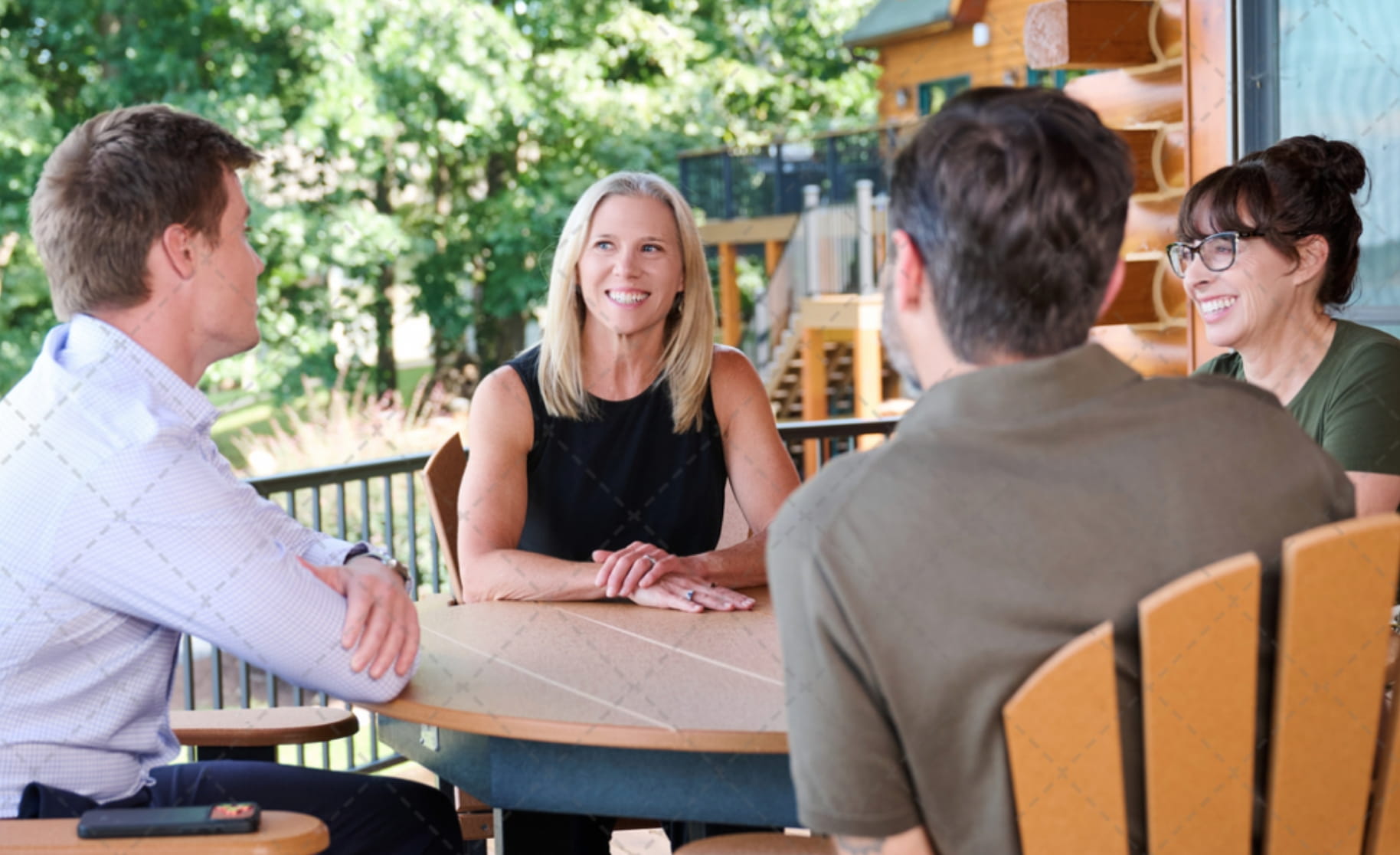
Most engagements are fully virtual. When it makes sense, Kathryn hosts an occasional in-person session or small-group offsite at Lake Gaston, VA. Wherever the work happens, the structure holds.
A clear start, a steady cadence, and accountability that lasts beyond the call.
Frequently asked questions.
Every athlete knows the value of a good coach. Kathryn brings that same perspective to the business world, working with individuals and teams at every career level who want to sharpen their leadership skills and improve their performance. Whether you're stepping into a new role, navigating a tough transition, or simply want to lead with more confidence, every engagement is built around your specific goals.
Coaching engagements run 3 or 6 months, with 60-minute virtual sessions scheduled every other week and asynchronous access available in between.
Kathryn is based in the Raleigh, North Carolina area. Most of her coaching engagements are conducted virtually, though she can meet local clients in person, and she travels for on-site engagements with teams and leaders as well.
Yes. Kathryn works with both individuals and teams looking to operate at a higher level. Team coaching typically includes a baseline assessment and targeted activities that help groups build the alignment and effectiveness they can't always reach on their own. Individual coaching is one-on-one, focused on helping clients create lasting change toward their professional and personal goals.
Executive coaching is focused on developing and empowering the individual client, expanding self-awareness so they can purposefully choose how to create sustainable behavioral change. Kathryn works with clients to unpack internal assumptions and identify blind spots. A consultant, by contrast, typically relies on external frameworks to prescribe solutions and advice.
Coaching is a thought partnership. Kathryn's approach is rooted in the International Coaching Federation (ICF) framework, which centers on the client's own agenda. She uses active listening and intentional questioning to help clients leave every session feeling inspired and empowered.
Clients can expect:
A client-driven agenda: You are the expert on your own life and career, and you choose the focus of every session.
Future focus: Unlike therapy, which often works through past experiences, or consulting, which focuses on giving advice, coaching starts with where you are now and helps you move toward where you want to be.
Co-creation: The relationship is a peer-to-peer partnership. Kathryn won't hand you a pre-made blueprint; instead, you'll co-create strategies tailored to you.
Powerful questioning: Expect open-ended, thought-provoking questions that challenge your assumptions and expand your thinking.
Built-in accountability: You track your own progress, and Kathryn holds you accountable to the commitments you make to yourself, helping you navigate obstacles as they come up.
Sustainable change: The goal is to build your internal capacity so you can self-correct and sustain your growth long after the engagement ends.
ICF Code of Ethics: Every session takes place in a confidential, non-judgmental space that strictly adheres to high ethical standards for your privacy and psychological safety.
Redesign How You Lead is Kathryn's signature approach to leadership development. After three decades in corporate America, she built this method, supported by a proprietary app, to help leaders break free of office constraints and work through their toughest business problems together. Participants pair up for a focused outdoor walk, exchanging ideas and working through carefully crafted questions. Research shows that walking boosts creative thinking, time in nature restores attention and mental clarity, and one-on-one dialogue surfaces ideas and honesty that rarely emerge in a conference room. The app captures each conversation, analyzes the discussions, and surfaces patterns and themes across the group, fueling a richer debrief. Participants leave with sharper thinking and real progress on the problems they came to solve. It's a different kind of thinking: active, solutions-driven, and unique.
No. Most coaching conversations happen virtually, and Kathryn understands the real-world constraints of today's business leaders. That said, moving the conversation outdoors, or scheduling it for a time when a walking meeting is possible, is always encouraged.